

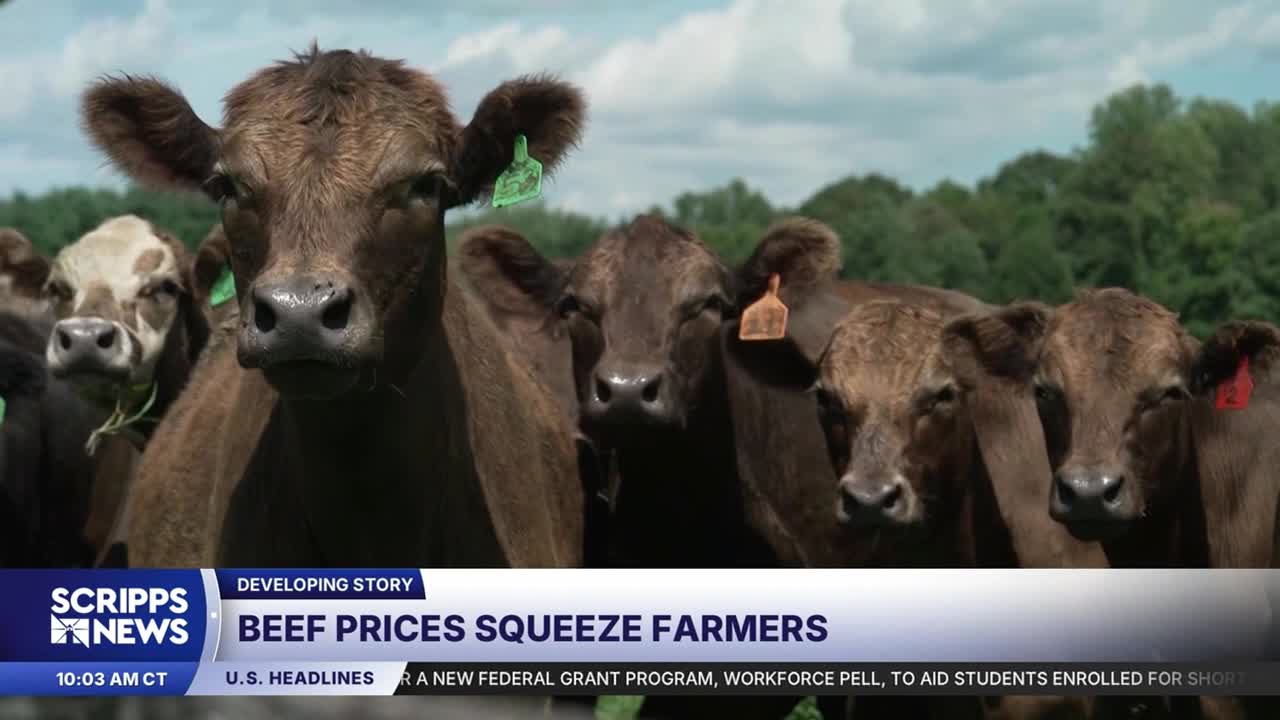


Jason Leavitt grew up on the farm in Calvert County, Maryland he now runs with his family. He ushers over 100 cows around their 160 acres of arable land, letting his grass-fed, grass-finished cattle graze on more than a dozen different pastures.
He understands what Pres. Trump is trying to do with the foreign beef deal, importing 300,000 metric tons of ground beef and selling it 25% below market value, but Leavitt believes that move is just a band aid on a bigger problem.
“Is it the worst thing in the world? No. Is it going to solve the intrinsic problems in the food production systems, specifically as it is related to beef production, I highly doubt it,” Leavitt said.
RELATED STORY | Trump to allow more beef imports as some Republicans warn it could hurt ranchers
The cattle ranching industry has been dwindling for decades. In January, America’s cattle inventory hit a 75 year low – with 86.2 million cattle and calves, and the number of cattle farmers is dropping too.
"We do not have enough supply for the demand that exists at our current price point for the product that we provide. So to me, that shows that there's room for other people to come on in,” Leavitt said.
Leavitt sells his beef directly to consumers, which protects his farm from the influence of the beef commodities market. But other cattle farmers whose bottom line does rely on the market price of beef are “100% against” Trump’s deal. “The best solution is to leave the government out of everything we do and let the market correct itself,” said Jim Hertzog , the owner of MoKan Livestock in Butler, Mo.
Another farmer, Jim Bourne of 1690 Farm in Maryland, is also a bit frustrated by Trump's deal. “When I saw that we were going to import beef and cut the tariff prices, and I just thought, you know, this is not the way to go about helping farmers,” he said.
There's also skepticism across the beef industry about whether the 25% savings the president promised will actually reach shoppers in the checkout line.
“What's probably going to happen with this beef that's being imported is the packers are going to mix it with domestic beef, pocket the savings, and the consumer is not going to see that much relief at the end of the day,” said Bourne.
IN CASE YOU MISSED IT | 'Backwards shopping': A new strategy to cut your grocery bill
Four meat packing companies control about 85% of the country’s beef processing, and none have commented on how the increase in foreign beef will be handled. It's also unclear if the imported beef will be labeled as such, so shoppers know what they’re buying.
Scripps News reached out to the Trump administration to try to get more information on this deal to import foreign beef, like what countries are involved and when the 90-day window began, but we didn’t hear back.


