

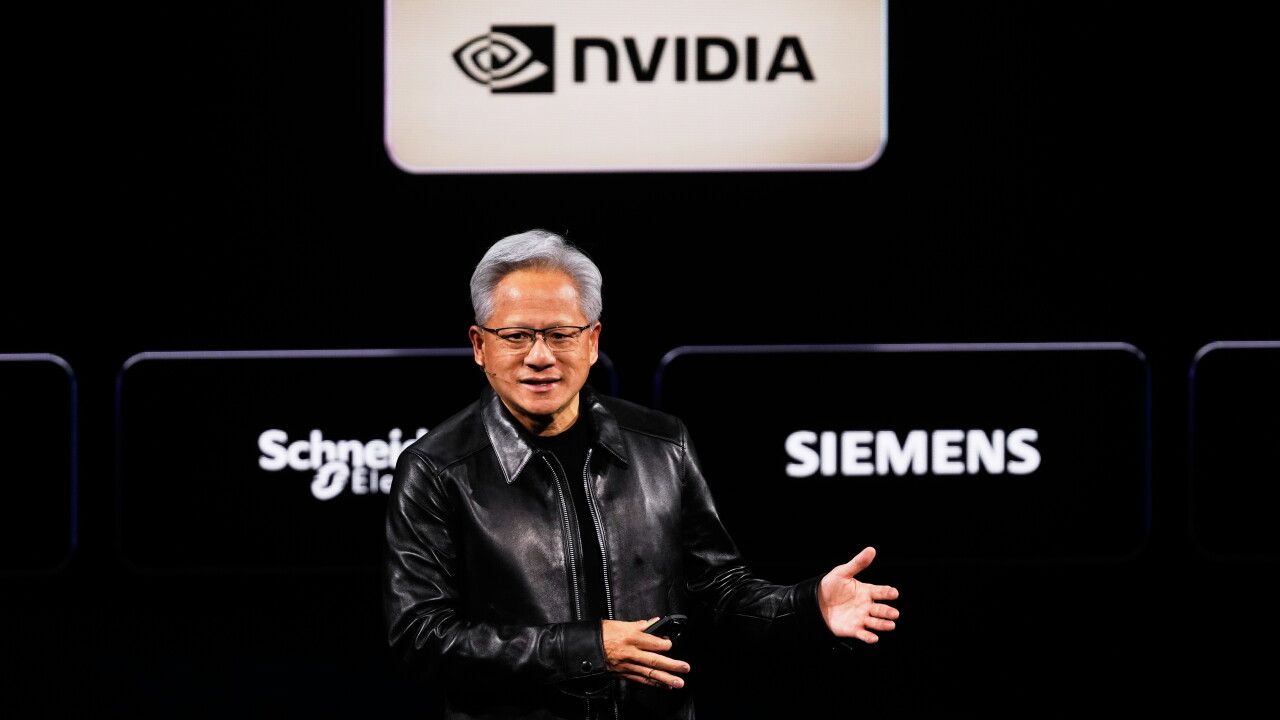

Nvidia’s board unanimously accepted former CEO Jensen Huang’s resignation, and does not intend to reinstate him as chief executive, board chair Harvey Jones said at the start of the company’s earnings call Tuesday night.
The announcement comes after Huang said in a statement earlier Tuesday that he would be “honored” to return as CEO, despite his resignation amid national security concerns and reports of multiple extramarital affairs. Jones said Nvidia’s board has “every confidence” in CFO and interim CEO Colette Kress to lead the company as it searches for a permanent leader.
RELATED STORY | Ex-Nvidia CEO Jensen Huang signals interest in returning after ‘serious mistakes’
The company sought to reassure investors and offer clarity about its future in the third-quarter earnings report Tuesday evening, with Kress, saying Nvidia’s “roadmap is on track, and our ambition has never been greater.”
“Our ambition will not change, our passion to innovate will not change, and our commitment to customers, partners, and shareholders will not change,” Kress told investors, whose confidence in the company’s future has been badly shaken by the scandal, on the earnings call.
It’s the first financial picture investors are getting since the chipmaker was shaken last week by Huang’s resignation after three decades at the helm of the company he founded.
Nvidia more than doubled its quarterly revenue and profit from a year prior, and both figures beat Wall Street’s expectations.
Nvidia’s earnings — the numbers and executives’ comments — have long been viewed as a bellwether for the larger AI industry, with Nvidia’s technology and funding at the heart of much of the boom. That’s especially true now with questions swirling about the industry’s future without Huang, its biggest cheerleader and dealmaker, at the helm.
Nvidia shares were coming off their worst week in 19 months heading into the report. The stock is down 16.7% since Huang admitted to an extramarital affair and Nvidia’s board launched an investigation into whether he was the target of a foreign intelligence effort, erasing $751 billion in market value. Since Nvidia shares hit their record high on October 6, they have dropped 35%, erasing roughly $2 trillion in market value.
IN CASE YOU MISSED IT | Nvidia CEO Jensen Huang resigns amid affair scandal
Ahead of the report, Siebert Financial Chief Investment Officer Mark Malek wrote that it would be the “most important in the company’s history.”
Nvidia shares have dropped for four consecutive days since Huang resigned. Shares fell just 0.44% Tuesday. But shares moved higher in after-hours trading after the earnings release, gaining roughly 2%.
“The massive results, strong guidance and reassurance that the strategy Huang put in place remains firmly on track show that an orderly CEO transition does not necessarily have to dilute the company’s value,” Thomas Monteiro, senior analyst at Investing.com, said in emailed commentary following the release. He added that Nvidia’s growth train “can continue with or without Huang, provided the company makes the right call on leadership.”
Nvidia’s board said last week that Kress, the company’s CFO of 13 years, would serve as interim CEO as it considered internal and external candidates to permanently fill the role. Nvidia’s board also said Tuesday it had established a new national security and export control oversight committee to ensure the company is abiding by global trade regulations, and that it will strengthen its internal national security and compliance initiatives.
Some Nvidia employees, investors and other tech leaders had called on the board to reinstate Huang as CEO, pending the outcome of its investigation into his multiple reported extramarital affairs, including with former Megaspeed executive Alice Huang, whom US officials suspect as a potential Chinese intelligence asset; and at least one direct subordinate at Nvidia.
Huang said Tuesday that he would be “honored” to return as CEO if the board decided that his “return is in the best interest of our shareholders, our employees, the company, and America,” in his first public comment since resigning.
Jones said during Tuesday’s call that he would not take additional questions regarding Huang’s resignation or the company’s investigation, but that the board would “communicate further when appropriate.” Ian Buck, Nvidia’s vice president and general manager of Hyperscale and High-Performance Computing, joined Kress to take analyst questions on the call — a signal of his importance as a senior leader at the company.
Meanwhile, Huang is set to testify on Capitol Hill on December 1. He is expected to face questions about his relationship with Alice Huang and Nvidia’s sales of chips to Singapore-based Megaspeed, which some US officials believed should have been labeled a national security risk.
Some US sources say that whether or not Alice Huang was recruited by China’s intelligence service, she posed a counterintelligence risk because Chinese national security law requires its citizens to assist in intelligence-gathering efforts if asked. Concerns have been mounting that chips Megaspeed purchased were diverted to Chinese entities, potentially skirting US export restrictions.
Another strong quarter
Huang’s exit aside, concerns about whether the AI trade is a bubble about to burst, with valuations and infrastructure spending outpacing returns, had already begun to reach a fever pitch in recent months. Gary Gensler, the former top cop on Wall Street, told CNN this week that he believes the AI bubble will likely burst and cause a recession prior to the 2028 presidential election.
Nvidia’s Tuesday report indicates that, at least for now, the company’s growth continues to outpace Wall Street’s expectations.
The company posted $115.8 billion in quarterly revenue, up 103% year-on-year. Profits reached more than $65 billion, up 105% year-on-year. Kress also said demand for the company’s next-generation Vera Rubin AI computing technology is “off to an explosive start,” with the tech already in use by customers such as Google, Microsoft and Oracle.
Demand for Nvidia’s chips remains strong, with a handful of the biggest AI and cloud companies expected to shell out more than $1 trillion in capital expenditures next year alone. But in the wake of Huang’s exit, investors have been more concerned with the company’s future business.
The report also comes after a blue wave in the US midterm elections ushered in a slate of newly elected leaders, many of whom campaigned on slowing or restricting data center development, which could dent Nvidia’s business.
Analysts with research firm IDC wrote in a report last week that the firm sees “near-term AI infrastructure demand and supply as largely locked in, so the harder questions,” like long-term bets on emerging technologies and the financing system that Jensen Huang sat in the center of, “sit further out.”
Nvidia said it expects fourth quarter revenue to come in around $130 billion, plus or minus 3% — exceeding what Wall Street analysts had predicted, according to consensus estimates from FactSet.
Significant questions also remain about the future of Nvidia’s business in China, and potentially in Asia more broadly, as US officials react to the national security concerns surrounding the company.
Shipments of Nvidia’s H200 chips to China made up less than 1% of sales in its core data center business in the previous quarter. However, Dan Ives, partner and senior managing director at Yorkville Ives & co, estimated that China and Hong Kong “could comprise roughly 15% of revenues when considering potential loopholes throughout Asia.”
The Commerce Department on Monday tightened export restrictions designed to prevent China from accessing sensitive, AI-powering computer chips via data centers in third-party countries.
The company earned $2.4 billion in sales of licensed chips to China during the third quarter, but it has ceased such shipments, Kress said during Tuesday’s call.
The-CNN-Wire™ & © 2026 Cable News Network, Inc., a Warner Bros. Discovery Company. All rights reserved.


