

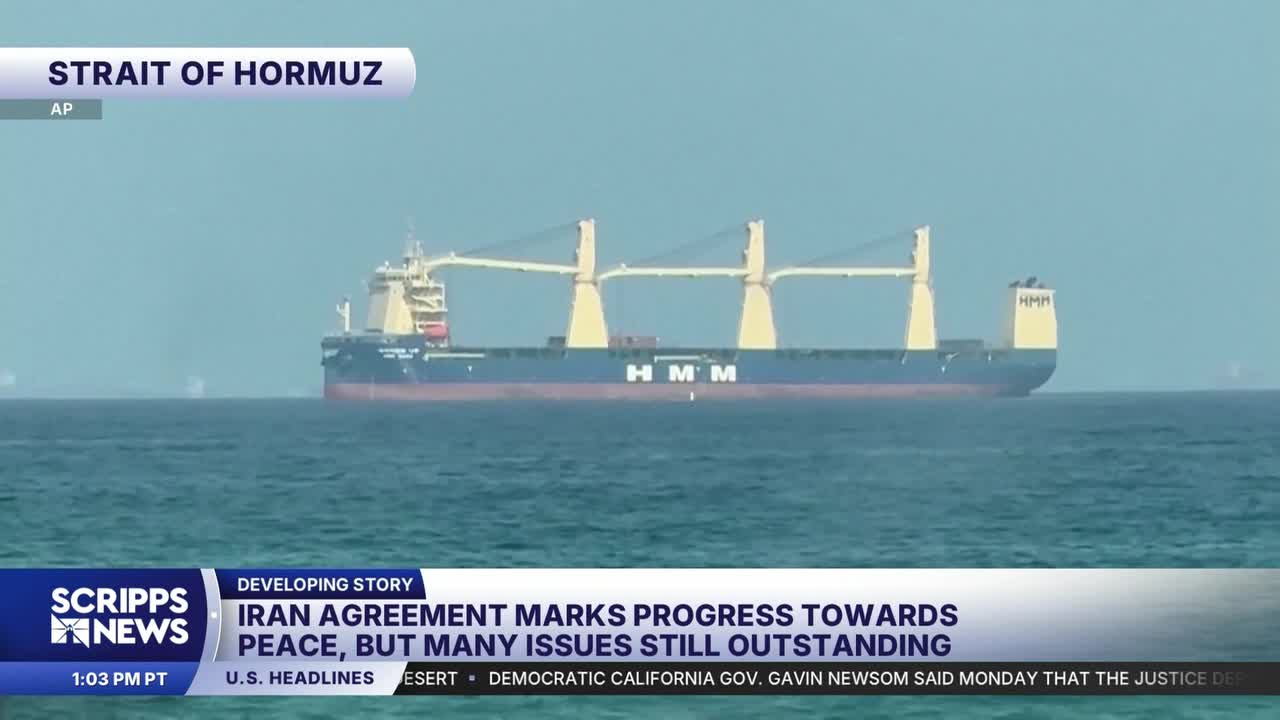


More details are coming to light about the memorandum of understanding between the United States and Iran as efforts continue to end the war.
According to administration officials, President Donald Trump, Vice President JD Vance and Iranian Parliament Speaker Mohammad Bagher Ghalibaf electronically signed the agreement. An in-person signing ceremony is expected Friday in Geneva, Switzerland.
While many details remain unclear, officials outlined several provisions included in the agreement. It would extend the U.S.-Iran ceasefire for 60 days, reopen the Strait of Hormuz to commercial shipping, lift the U.S. naval blockade of Iranian ports and return both sides to negotiations over Iran's nuclear program.
Trump has repeatedly said preventing Iran from obtaining a nuclear weapon was the primary reason the United States joined Israel in military operations against Iran.
RELATED STORY | Trump's Iran deal draws questions from Republicans
Speaking Monday at the start of the G7 summit in France, Trump expressed optimism about future relations between the U.S. and Iran.
"Hopefully, it's going to be a good relationship, and we're going to get along," he said. "And if we don't, we go back to where we started. But I don't think that's going to be necessary."
While Trump has suggested the Strait of Hormuz could reopen quickly, senior administration officials told reporters that a return to pre-war shipping levels may take two to three weeks.
White House officials also insisted there would be no tolls imposed on vessels using the waterway. However, some Iranian officials have suggested otherwise. As recently as Monday, a spokesperson for Iran's Foreign Ministry said Iran could seek fees in exchange for services it provides in the strait.
RELATED STORY | Countries welcome US-Iran deal, but key details and energy market impacts remain unclear
Another major question is how the agreement could affect fighting involving Israel and Hezbollah in Lebanon.
Pakistan Prime Minister Shehbaz Sharif, who has served as a key mediator in the negotiations, initially said the agreement included an immediate cessation of hostilities across the region, including in Lebanon.
Israeli officials, however, have maintained that their military is not withdrawing from Lebanon. The Israeli military carried out a strike in southern Lebanon earlier Monday, and U.S. officials told reporters that Lebanon is not explicitly addressed in the memorandum of understanding.
U.S. officials expect the full text of the memorandum of understanding to be made public within the next couple of days.


