

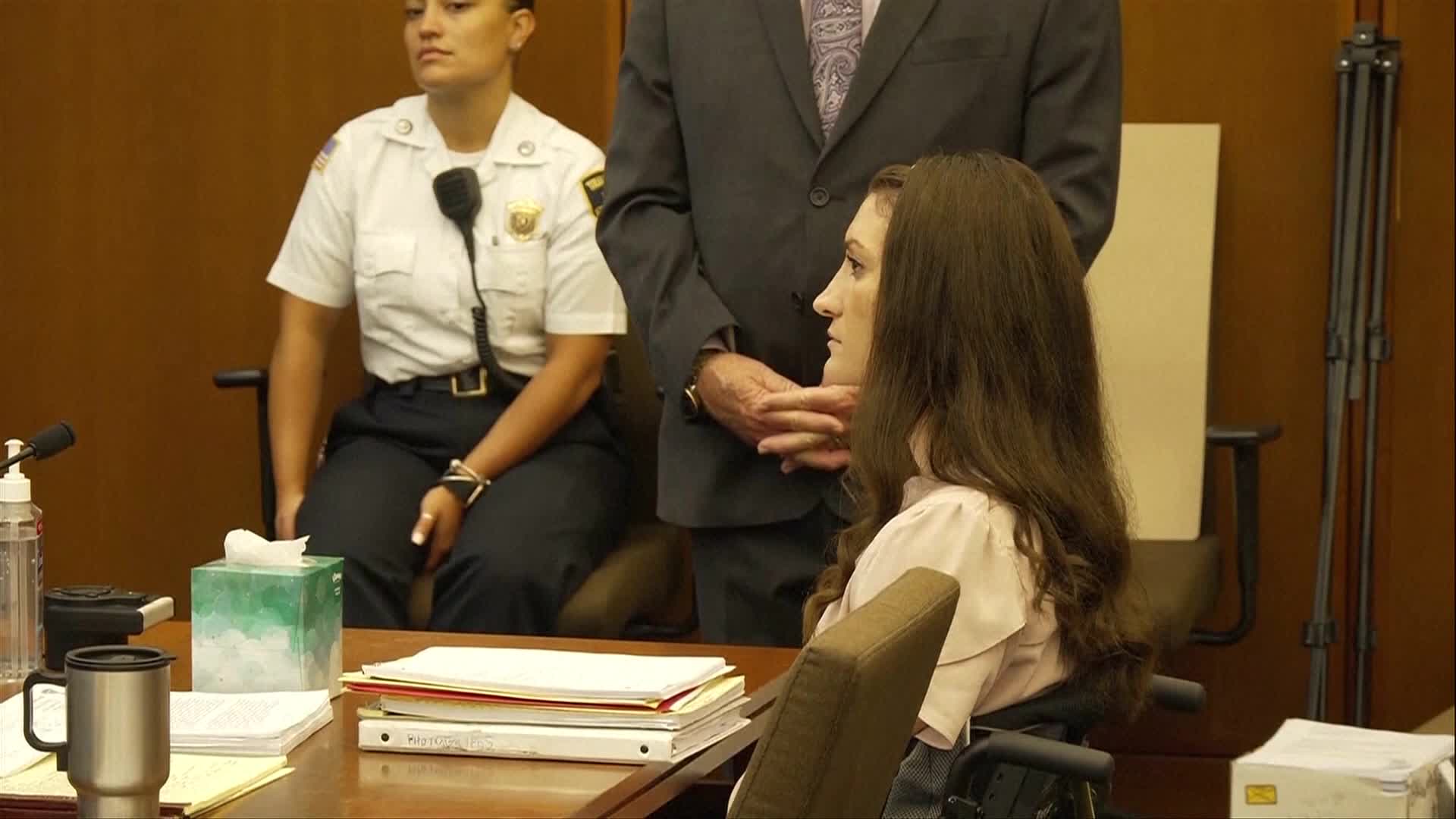


While Lindsay Clancy is fighting murder charges in a Massachusetts courtroom, social media is exploding.
Armchair lawyers at home, forensic analysts, psychiatrists, and medical professionals have taken over, throwing in their two cents about the case. Not all of it is factual.
"I can't believe what I'm seeing on some of these TikToks that are out there and some of the dangerous and reckless theories that I'm seeing," said crime podcast host Annie Elise.
But those videos are the ones getting noticed. The likes and comments are all racking up.
Annie Elise hosts her own true crime podcast and Kathryn Coduto studies the intersection of true crime and media. They’re both concerned some individual users are looking to fit a particular juicy narrative, just for clicks.
"People look at it as entertainment, and in the comments of all of these videos, whether it's an outlandish theory or not, I'm seeing 'grabbing the popcorn. Can't wait for court to start.' 'We're gonna have a watch party when Reddington's defense starts,' and I'm like, 'this is not entertainment. Three children lost their lives. You're losing the plot here,'" Elise said.
Scripps News' Alex Miller: Has this become a fandom?
Kathryn Coduto: I think, in a way, it has. I think that when you look at the case itself, it has these key characters that people are drawn to.
Coduto: As people have gotten interested in this story and really committed to it, the algorithms have figured that out. The algorithm is not making a determination about we're only going to show factual content.
RELATED NEWS | Women in pink rally in support of Lindsay Clancy, who is on trial for killing 3 children
And that’s what can be confusing. Coduto says seeing controversial videos coupled with educational ones can make deciphering the truth even more difficult.
"On the one hand, you will watch a video and it's going to be a conspiracy theory about Patrick Clancy that is absolutely not based in fact, but then the next video might be someone talking about postpartum depression, which is really important to have conversations around," Coduto said. "And so I think that makes it really difficult for people to know as they're going through their feeds what's real, what's not. It's also really hard to know if someone is an expert. You know, they might hide behind a TikTok handle or an Instagram handle."
But it's not always the random person in a basement. Those with some experience are getting involved too. One of those so-called experts was propelled into the case.
Emily Thorndike once worked at the psychiatric facility Clancy was treated at. She made a video about her time working there and made it to the stand before the judge ultimately denied the defense from using her as a witness.
"When you see a TikToker get called to the court, that opens an avenue for others to say, 'Well, this could be me,'" Coduto said.
And if the stand isn’t the goal, being interviewed for an eventual true crime documentary might be.
"When people are sharing their theory or their evidence that they've come up with and their timeline that they're hopeful that they will somehow get embedded within the case itself," Elise said.
RELATED STORY | Psychologist testifies Lindsay Clancy was not criminally responsible in killing of her 3 children
But what are the ramifications for perpetuating something false or even disparaging about another person on TikTok? Criminal defense attorney Seth Zuckerman says it’s not much.
"It's really hard to prove that someone did so, made a knowingly false statement, and that you're able to track down these people to begin with," Zuckerman said.


