

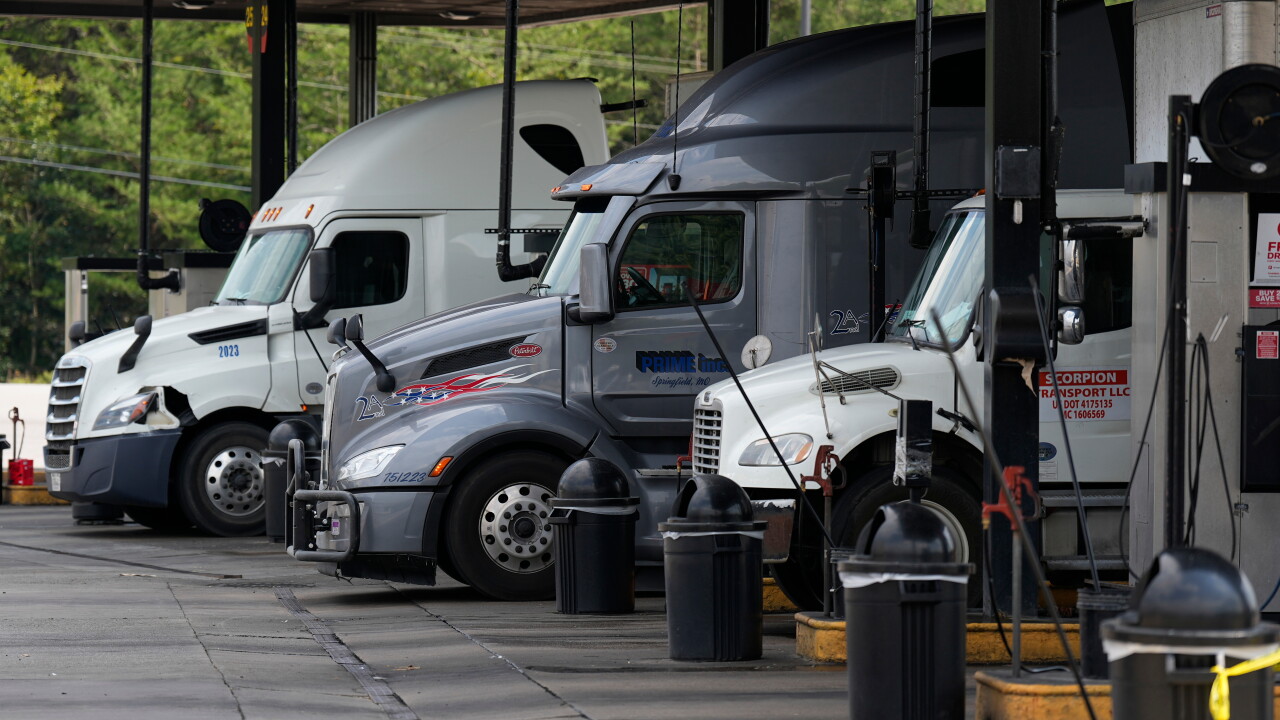


At least 16 trucking, delivery and transportation companies filed for bankruptcy between late August and Sept. 21, according to a tally by the trade publication FreightWaves, as diesel prices climbed to an all-time high. More have followed, including Chicago-based Midwest Expedited Co., a 95-truck carrier that filed for Chapter 11 protection on Oct. 6.
Bryan Singh, a long-haul truck driver who lives in Phoenix, feels it on the road and at home. "When you go to California, the diesel is almost $8," Singh told Scripps News. "And as a trucker, it's hurting me a lot."
Diesel is averaging around $6.30 a gallon nationally, according to AAA. That's down slightly from the record $6.53 set Sept. 22, but up about 73% from $3.65 a year earlier.
RELATED STORY | Senators say Trump's Russian diesel deal violates US law, demand White House reverse course
Experts who study and work in the industry say diesel is only part of the reason carriers are failing. And for shoppers, the bigger risk may not show up at the checkout line right away.
Lewie Pugh drove his own truck for more than 20 years before becoming executive vice president of the Owner-Operator Independent Drivers Association, which represents small-business truckers. He said 96% of registered carriers are small businesses, and 52% run a single truck.
Those operators don't get the volume discounts large fleets negotiate on fuel and tires.
"They're pretty much paying what you see on the pump unless they have a fuel card or something like that," Pugh said. The timing makes it worse.
"You pay for fuel, of course, when you buy it today, and you don't get paid for hauling the loads maybe for 30, 60, 90 days," Pugh said. "So it really, really puts a crunch on your cash and your capital."
OOIDA estimates that every $1 increase in the price of a gallon of diesel costs an independent trucker about $400 more a week. Pugh said truckers are now spending at least $1 a mile just on fuel.
Many of the carriers that filed were already struggling. Freight rates soared during the pandemic and new carriers flooded in, Pugh said. When demand fell, rates dropped while costs for trucks, tires and repairs stayed high.
FreightWaves has tracked waves of filings all year, including more than 20 trucking-related bankruptcies in a 30-day stretch in May, well before diesel hit its record.
"We were just starting to come out of that when boom, we got hit with this high fuel," Pugh said.
Stephen Burks, professor emeritus of economics at the University of Minnesota Morris and a former truck driver, said the industry just came through its longest freight downturn since the Great Recession, from late 2022 to late 2025. Diesel arrived just as survivors thought the worst was behind them.
"This could be the straw that broke the camel's back for any number of reasons for a middle size or smaller truckload firm," Burks said.
Freight rates do rise with fuel costs, he said, but typically with a lag of a month or two. Many larger carriers have contracts with fuel surcharges that adjust automatically. Smaller carriers have to survive the gap.
"If you don't have some extra cash to cushion you with the extra expenses before your rates increase, before your income increases, then you're in trouble," Burks said.
Both Pugh and Burks expect more failures.
RELATED STORY | Diesel prices set a new record as Trump calls on Ukraine to stop targeting Russian oil
Pugh said the extra cost will eventually reach shoppers, because manufacturers can't absorb increases this large. Diesel also powers farm equipment, and heating oil demand rises as winter sets in.
Burks is more measured about the checkout line. For most consumer goods, he said, transportation makes up a small share of the final price, so the direct effect of higher diesel should be limited, with a few exceptions.
His bigger concern is what happens if prices stay high.
"If this persists for a while, it's going to build itself into the underlying rate of inflation. And that's going to make it harder for the Fed to bring inflation down," Burks said. That could mean higher interest rates over the next six months to a year.
Even if diesel plateaus, Burks said, that "would lock in some of the damage."
Farmers burn thousands of gallons running combines at harvest, then more hauling grain to elevators. Persistently high diesel would be a modest drag on the economy, he said.
Pugh said what truckers and farmers need most is stability in fuel prices and freight demand. He compared this stretch to 2008 and 2009, when he owned trucks through a similar squeeze of high fuel prices and too much capacity.
For the industry as a whole, Burks said, the shakeout isn't a crisis. The pandemic boom added tens of thousands of new carriers, and entry into trucking is cheap, so others will step in when rates recover.
"We could lose 10,000 carriers and ... that's the normal adjustment of a nearly perfectly competitive market," he said.


