

More Americans are becoming part of the "sandwich generation" — caring for both their children and aging parents at the same time — and many are stepping into those responsibilities much earlier than anticipated.
A new Care.com report shows that dual caregiving responsibilities begin at age 34 on average. Of the 1,000 caregivers surveyed, 86% said they were "completely unprepared" when caregiving started.
"You got to pay the bills, you got to raise your kids. It feels very much like a tsunami," said caregiver Liz Minkin-Friedman.
The pressure comes from being pulled in multiple directions at once, with the workload comparable to a second full-time job.
"You're caught in the middle. You're raising children and you're the primary caregiver for your children. At the same time, if you have aging parents, they need support as well," said Matthew Turner of CareScout.
Feeling financially behind
Beyond emotional stress, many caregivers are also facing serious financial strain. Some reduce their work hours or leave the workforce entirely because of caregiving responsibilities — decisions that carry long-term consequences.
"That means not as much money is going into your 401(k) plan. You're not adding into Social Security," said elder law attorney and financial advisor Patrick Simasko. "It's now maybe a one-income household versus a two-income household."
According to Care.com, 77% of sandwich caregiver parents feel financially behind because of care responsibilities. When caregiving demands intensify, 52% say their savings get deprioritized.
Caregiving and impacts on your career
In a separate report from Zety, more than half of Gen X workers said caregiving is fueling workplace burnout.
Many are making major sacrifices, including lowering retirement contributions (17%), delaying retirement (16%), taking more flexible but lower-paying jobs (12%), or turning down promotions (10%).
Career expert Jasmine Escalera said the impact extends well beyond a worker's current paycheck.
"You're not just affecting your wallet now. You're affecting your growth and your ability to continue moving in your career," she explained.
In Zety's report, 3 out of 10 workers report receiving little or no support from their employer.
"If you are in a caregiving responsibility and you feel as though you are strapped, it's impacting your work, your focus, your ability to give your all," Escalera said, "then it's essential that you communicate to your employer what you need to be able to be your most productive self."
Experts say planning ahead can ease some of the burden. That includes finding out whether parents have long-term care insurance, building an emergency fund, and protecting retirement savings whenever possible. They also encourage caregivers to ask for help early and consider working with a financial planner.
The Care.com report also found mothers are carrying much of the load. Half say they are the default person family members turn to when care needs arise, and mothers spend more hours each week coordinating care than fathers.
Sandwich generation caregivers younger and less prepared than ever
Americans are raising kids and caring for aging parents at the same time — often starting at just 34 years old.
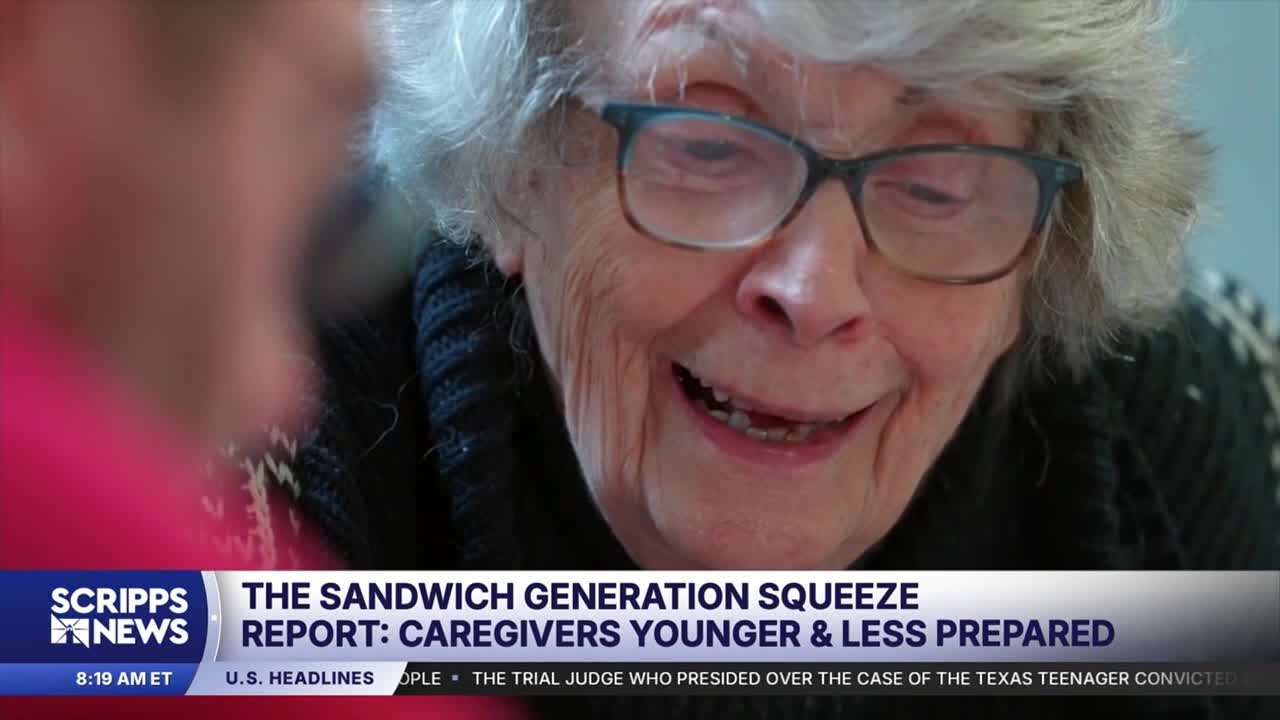
Americans are raising kids and caring for aging parents at the same time — often starting at just 34 years old. (Scripps News)



Posted
and last updated


