

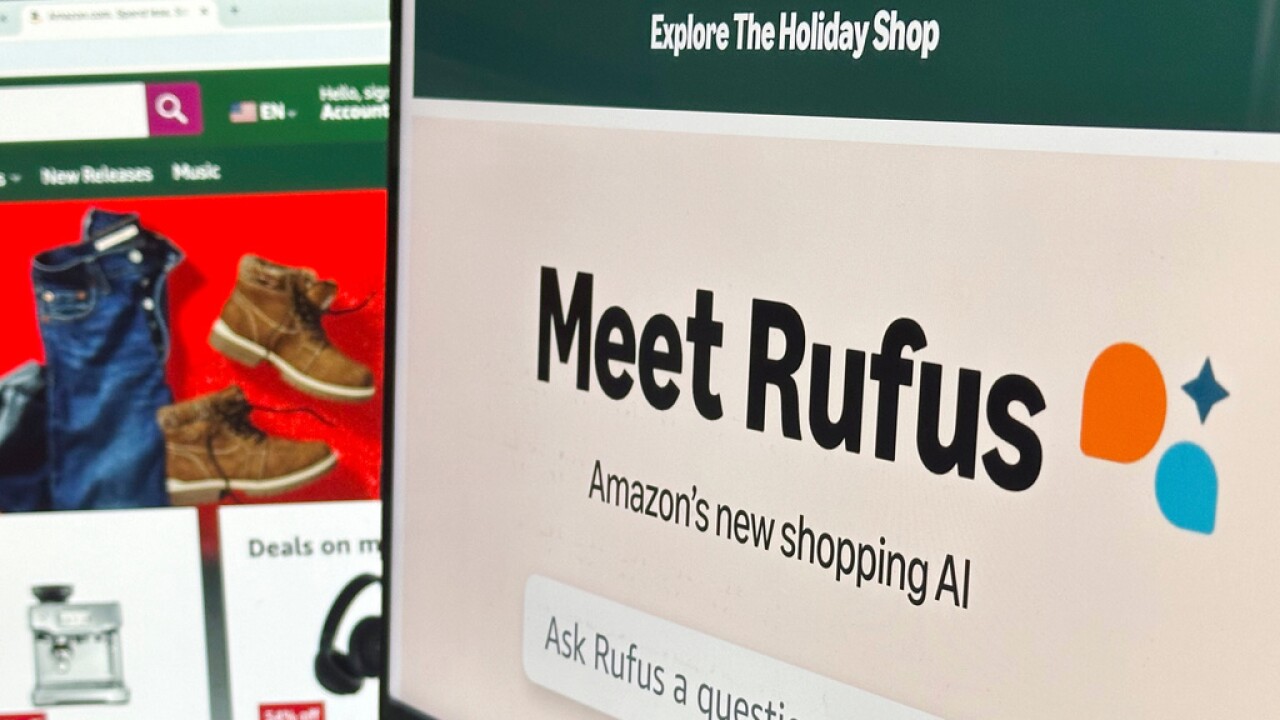



Amazon has Rufus. Walmart has Sparky. The craft retailer Michaels introduced an AI helper called Ask Mike.
More shoppers are using these AI tools to help make purchasing decisions — even if that means spending a little more. But there is still plenty of skepticism around AI shopping assistants, and most consumers are not ready to hand over full control just yet.
Commerce intelligence company Product.ai found 43% of online shoppers now use AI to help them shop. But 86% still verify those recommendations somewhere else before buying.
"They are very satisfied with AI. But the trust -- the full trust in using that information to go straight and close the purchase is not there yet," said Elena Madrigal, VP of Community and GTM at Product.ai.
Madrigal said the more expensive the purchase, the more research people tend to do. According to Product.ai, 42% of online shoppers would not trust AI's recommendation for purchases over $25 without checking another source first.
Shoppers also double-check products that could affect their health or safety.
RELATED STORY | Small business owners say Amazon is selling their products without permission
"Buying the wrong skincare product could create a rash. Or even buying the wrong running shoes can lead to an injury," Madrigal said.
Oliver Wright, senior managing director of industry and enterprise for consumer goods and retail at Accenture, said AI shopping tools are likely to keep growing as people look for faster, more personalized recommendations.
"If you and I put the same request in, it would obviously come up with a different set of recommendations, but it would be speaking in a way that would most relate to me. And that is very, very captivating for consumers," he said.
It is also important to know that AI is not always looking for the cheapest option.
"What AI is trying to do is act on the user's behalf. It's trying to think about what truly is the best outcome for you," Wright explained. "In some cases, it will recommend a product that might be more expensive, but it thinks ultimately is better value or a better fit for you."
RELATED STORY | Meta launches new AI search mode and photo editing tools on Facebook
Accenture found 71% of consumers expect generative AI to influence at least half of their spending decisions over the next year.
Contrary to Product.ai's findings, Accenture finds more consumers are ready to hand over more decisions to AI agents. In a survey of more than 25,000 active AI users, 74% of people said they would trust a personal AI agent more than their best friend to make a purchase on their behalf.
"That's even beyond folks now in-store. It has now become the most trusted source for the vast majority of people," Wright said.
Experts say AI shopping assistants can save consumers time by scanning reviews, ratings, inventory, and personal preferences. But they also say AI should be a starting point — not the final word — and shoppers should still verify pricing and product details before buying.


