

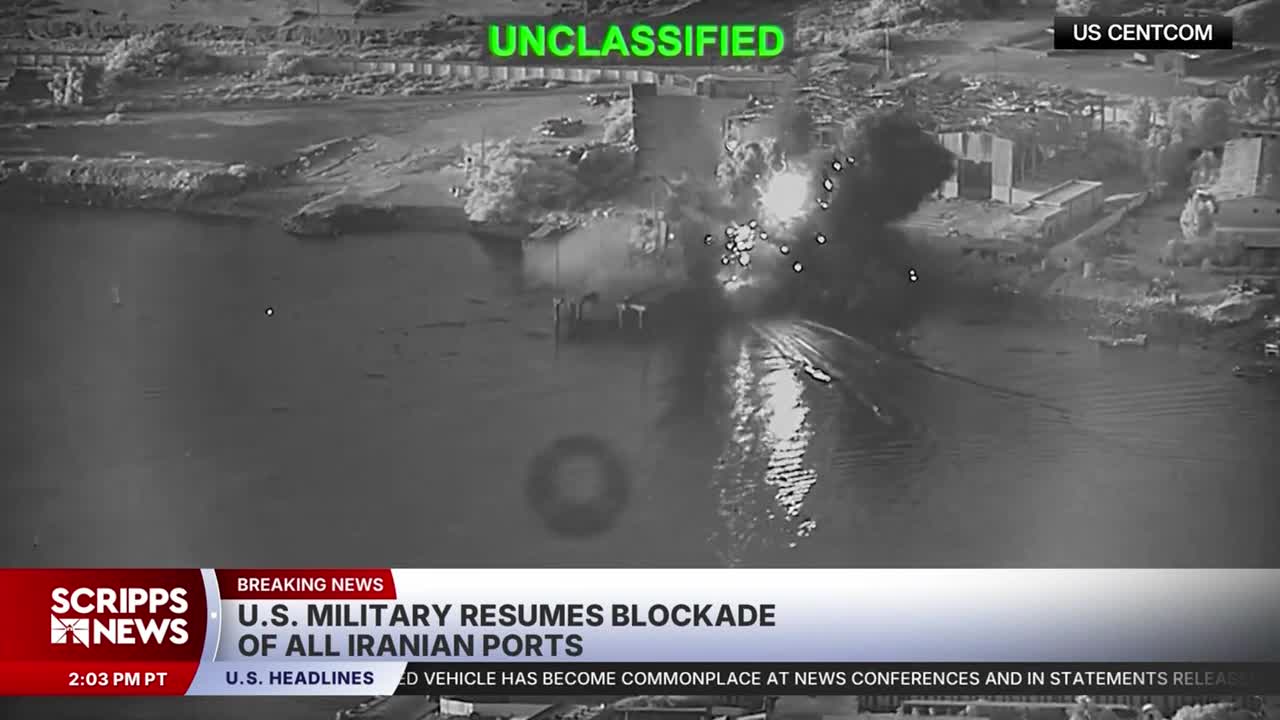


The United States on Tuesday reinstated its blockade on vessels transiting to and from Iranian ports and coastal areas in the Strait of Hormuz.
According to U.S. Central Command (CENTCOM), the blockade went into effect at 4 p.m. ET and there are now more than 20 U.S. Navy warships and "hundreds of military aircraft" currently operating in the region.
"American forces remain vigilant, lethal, and ready," CENTCOM said in a statement.
RELATED STORY | Trump drops planned Strait of Hormuz toll in favor of Gulf trade deals
The resumption of the blockade comes a day after President Donald Trump declared the U.S. "GUARDIAN OF THE HORMUZ STRAIT' and insisted that the vital waterway will remain open despite rising tensions in the region.
The U.S. also continued strikes against Iran on Tuesday. U.S. Central Command said the strikes “…will continue imposing a heavy cost on Iranian forces and degrade their ability to attack innocent civilians and commercial shipping in the Strait of Hormuz,” while Iran claimed to target U.S. bases in the region, and the UAE announced two national tankers were targeted by Iranian cruise missiles in the strait. Those strikes killed one crew member and injured others.
IN CASE YOU MISSED IT | Why has the US restarted strikes against Iran now?
The latest exchange of fire continues to threaten an interim deal meant to bring a temporary ceasefire between the U.S. and Iran, keep the Strait of Hormuz open, and give both sides time to negotiate a permanent end to the war.
However, the ongoing exchanges have repeatedly put the fragile ceasefire at risk and fueled worries about the safety of vessels moving through the Strait, a key shipping route that carries roughly 20% of the world’s oil supply.


