

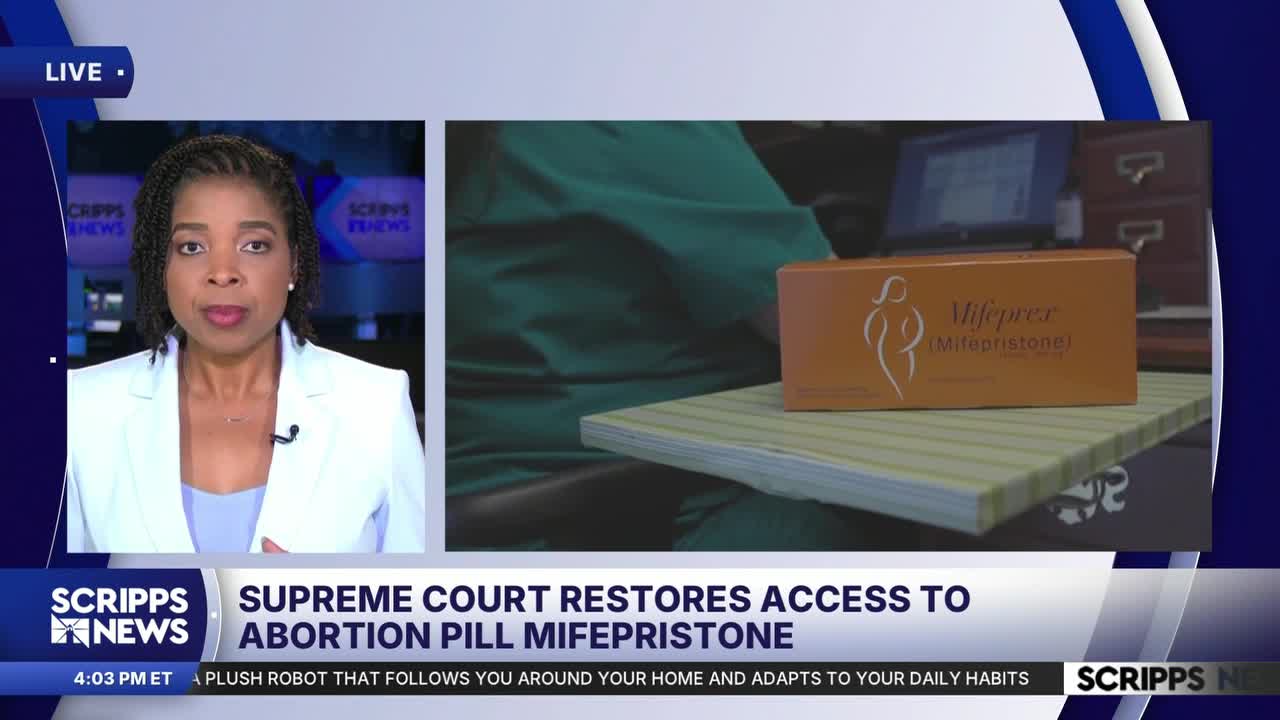



The Supreme Court on Monday restored broad access to the abortion pill mifepristone, blocking a ruling that had threatened to upend one of the main ways abortion is provided across the nation.
The order signed by Justice Samuel Alito temporarily allows women seeking abortions to obtain the pill at pharmacies or through the mail, without an in-person visit to a doctor.
Those rules had been in effect for several years until a federal appeals court imposed new restrictions last week.
RELATED STORY | Mifepristone maker asks Supreme Court to block ruling restricting mail access
The majority of abortions in the U.S. are obtained through medications, usually a combination of mifepristone and a second drug, misoprostol. Their availability has blunted the impact of abortion bans that most Republican-led states have started enforcing since a 2022 Supreme Court ruling that overturned Roe v. Wade and allowed for state bans.
Louisiana sued to restrict access to mifepristone, asserting that its availability undermined the ban there.
Some Democratic-led states have laws that seek to give legal protection to those who prescribe the drugs via telehealth to patients in states with bans.
RELATED STORY | Court restricts abortion access across the US by blocking the mailing of mifepristone
Alito's order will remain in effect for another week while both sides respond and the court more fully considers the issue.
Manufacturers of mifepristone filed emergency appeals asking the Supreme Court to step in.


