

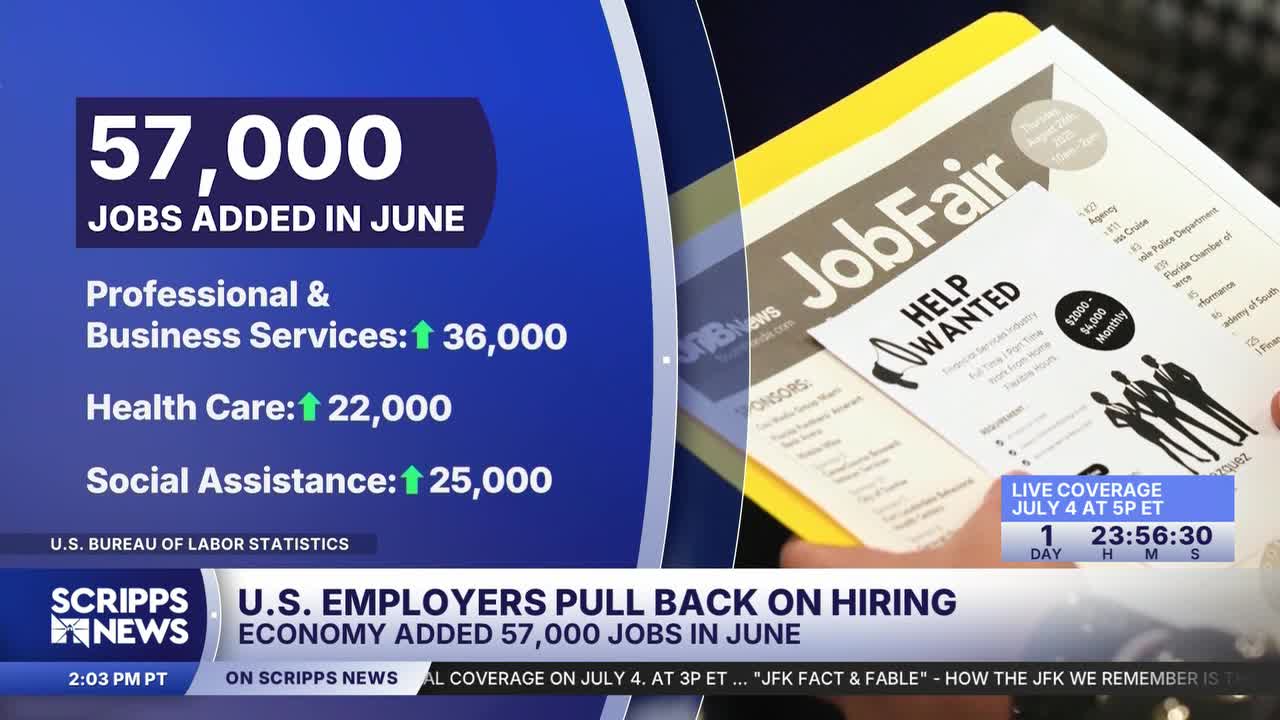


U.S. employment grew in June 2026, albeit at a slower pace than in previous months, according to a report released Thursday by the Bureau of Labor Statistics.
The U.S. added 57,000 jobs in June, down from the more than 100,000 jobs per month added during the spring. The unemployment rate was largely unchanged at 4.2%.
Despite continued job growth, some indicators point to a slowing economy. The labor force participation rate — which measures the share of adults who are working or actively seeking work — declined 0.3 percentage points in June. The rate has fallen by 1 percentage point since November. The employment-population ratio has posted a similar decline.
Although the overall number of unemployed Americans is largely unchanged from a year ago, the number of people experiencing long-term unemployment increased by 286,000 over the past year. Long-term unemployment refers to people who have been out of work for 27 weeks or longer.
RELATED STORY | Job openings stayed at a surprisingly strong 7.6 million in May
Conditions also appear to be softening for workers who remain employed. Weekly earnings rose 3.8% from a year ago, but that increase has not kept pace with inflation, which remains above 4%.
Taken together, the latest jobs data suggest the economy is not collapsing, but persistent inflation is beginning to strain the labor market.
“The pace of hiring is telling a story of both supply and demand. We know it’s taking people longer to find work, but there also are signs of labor supply constraints in certain industries,” said Dr. Nela Richardson, chief economist at ADP. “For now, the overall effect is a slowdown in job creation.”
RELATED STORY | Why the health care industry gets a hiring boom while the rest of the labor market cools


