

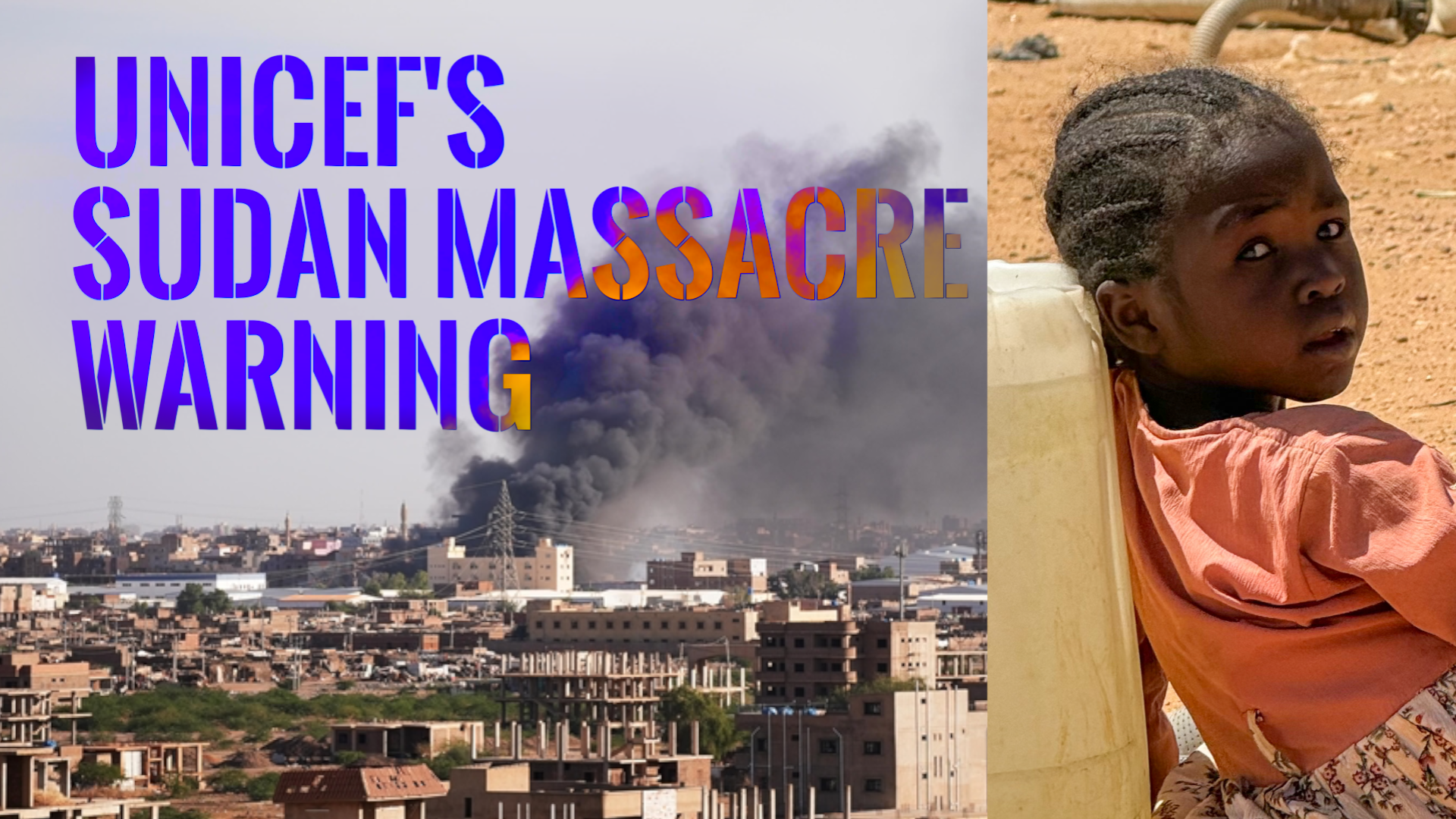


In December, in the Sudanese capital of Khartoum, I met families who had fled the war with their children still beside them. Alive. Fed. Loved. Safe.
Six months later, the front lines have moved, and the question is whether children like those will survive what is bearing down on them now.
You can watch my full conversation with UNICEF's Sheldon Yett in the video player above.
The new flashpoint is El Obeid, the capital of North Kordofan and a strategic supply hub for the Sudanese army. The Rapid Support Forces, the paramilitary group the United States has accused of genocide, have encircled the city. The United Nations now warns that roughly 500,000 civilians inside El Obeid and the area around it face an immediate risk of large-scale violence.
Yett, UNICEF's representative to Sudan, connected with me from Khartoum. When I asked whether the label we had used in December, the world's worst humanitarian crisis, still applied, he did not hesitate.
"That label applies in spades," Yett said. "This conflict has become worse by the day. The front lines continue to move, continue to expand."
That expansion is what alarms the people charged with protecting Sudan's children. United Nations officials have told the Security Council that El Obeid carries the markings of El Fasher, the Darfur city where the RSF carried out a massacre last year. Drone attacks by both sides around El Obeid have climbed sharply. Nearly 80 percent of reported child casualties in the area have been linked to those drones.
MORE FROM SUDAN | 'Lion Cubs': How two armies are using children to fight a brutal war
Yett laid out the danger in plain terms.
"We know that the risk of extreme violence is very high," he said. "We know the risk a siege is high. And we know that if this does happen, the loss of life, not just from the kinetic violence, but from the impact of the siege, will be absolutely massive."
Reaching those children has become its own ordeal. Aid convoys carrying food and medicine are stopped at checkpoints for days. Permits pile on permits. Yett described trucks held even after permission had been granted at the highest levels. UNICEF says it is funded at a fraction of what the emergency demands, forcing decisions about which communities it can serve and which it cannot.
"It means that children are going to die who wouldn't ordinarily die," Yett said.


