

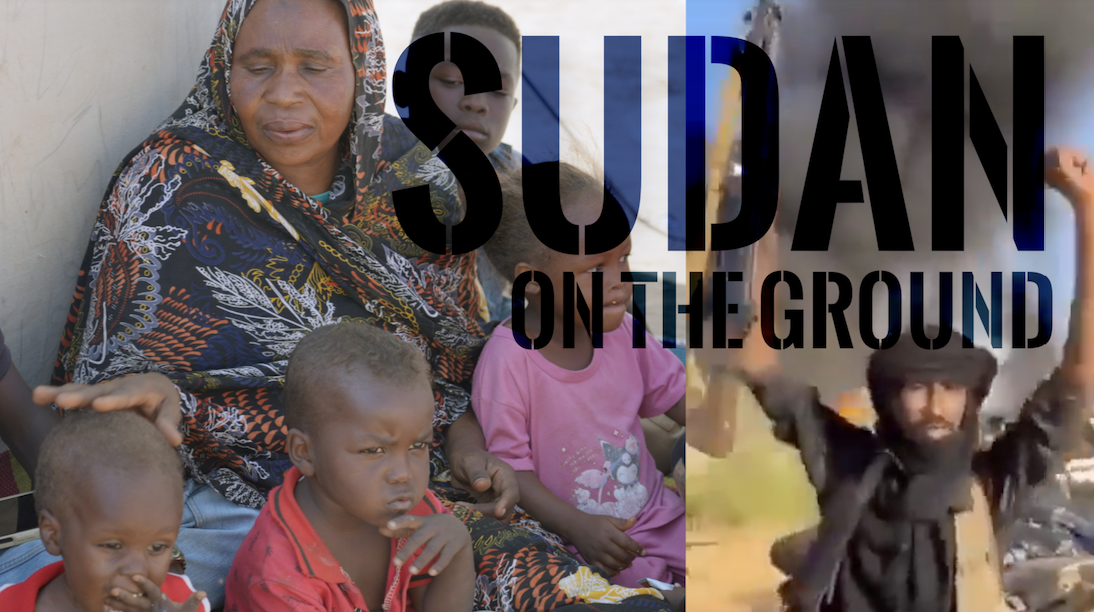


Sudan is now the world's worst humanitarian crisis, according to a new report from the International Rescue Committee, as war, starvation and mass displacement continue to devastate the country and cut off large parts of Darfur from outside scrutiny.
The IRC's latest Emergency Watchlist ranks Sudan at the top of its global list, citing what aid groups describe as the largest displacement and hunger emergency in the world. More than 14 million people have been forced from their homes, about half of them children, according to United Nations agencies and humanitarian organizations.
The report comes amid mounting allegations of atrocities committed by the paramilitary Rapid Support Forces in the Darfur city of El Fasher, which fell after a prolonged siege that blocked food, medicine and humanitarian access. No independent journalists have been allowed into the city, leaving much of what happened there difficult to verify.
Aid groups say El Fasher endured an 18-month siege that lasted roughly 500 days before the RSF overran the city on October 26. Hundreds of thousands of civilians were trapped inside. Human rights organizations and UN officials have reported killings, abductions and systematic violence against non-Arab ethnic and tribal communities in Darfur.
The Rapid Support Forces are descendants of the Janjaweed militias blamed for genocide in Darfur two decades ago. International observers warn the current campaign shows disturbing similarities to that earlier violence.
Against that backdrop, Scripps News became the first American news network to reach a remote displacement camp in the Sudanese desert and speak directly with survivors who escaped El Fasher. Their accounts offer rare eyewitness testimony from a city that has been largely sealed off from the outside world.
In the camp, survivors described months of starvation, fear and uncertainty, along with confusion over how many people survived the fall of El Fasher.
Ahmed Al-Zayn, a mother of six, told Scripps News that during the siege, it became too dangerous to leave her home to look for food.
"The deaths became many," she said. "We became hungry. We were shaking from hunger, so we left."
Before fleeing, Al-Zayn said she found two orphaned children in the market after discovering their parents' bodies. Omran, 5, and Munzir, 3, became part of her family even though she had no food to give them.
"So we picked them up, carried them, and fled with them," she said.
They escaped El Fasher at night, but safety was still far away. Al-Zayn said many displaced people died on the journey or were captured by the RSF.
"I was very afraid," she said. "The children were weak. Munzir was very sick. I thought they would die."
She said young men faced particular danger.
"I myself have six boys," Al-Zayn said. "I was afraid they would catch them and I would have to pay money to release them."
Her children helped carry the weakest among them across the desert. For days, she said, their only food was gumbas, a type of dried animal feed soaked in water and rationed to one meal a day.
"We spent eight days on the road," she said. "And without any money."
Those without money, she said, are often still trapped inside El Fasher. "The people who don't have money, you still find them there. And the people who have money, their families tell them to leave."
At the camp, Omran and Munzir received treatment for severe malnutrition. Al-Zayn said Omran weighed just 4 kilograms, about 9 pounds, when they fled El Fasher. Weeks later, she said, he had gained 15 kilograms, or 33 pounds, and had fully recovered.
"So praise be to God, we arrived here," she said. "His health is one hundred percent."
The camp, located near Al-Dabba, was built and funded by a Sudanese businessman. It is hot, dusty and overcrowded, but families there have access to food, medical care and relative safety. Children play again.
From the moment the boys came to her, Al-Zayn said she became their parent. If relatives are found, she will hand the children over. If not, she will continue to care for them.
"God enabled me to take responsibility," she said.
Asked what future she hopes for them, her answer was simple. "May God raise them and let them grow up," she said. "That they learn and keep learning. That they become doctors or something great."
Aid groups warn that without immediate international attention and humanitarian access, more cities in Darfur risk the same fate as El Fasher. For now, much of what happened there remains unseen. What is clear from survivor testimony, they say, is that many never made it out.


