

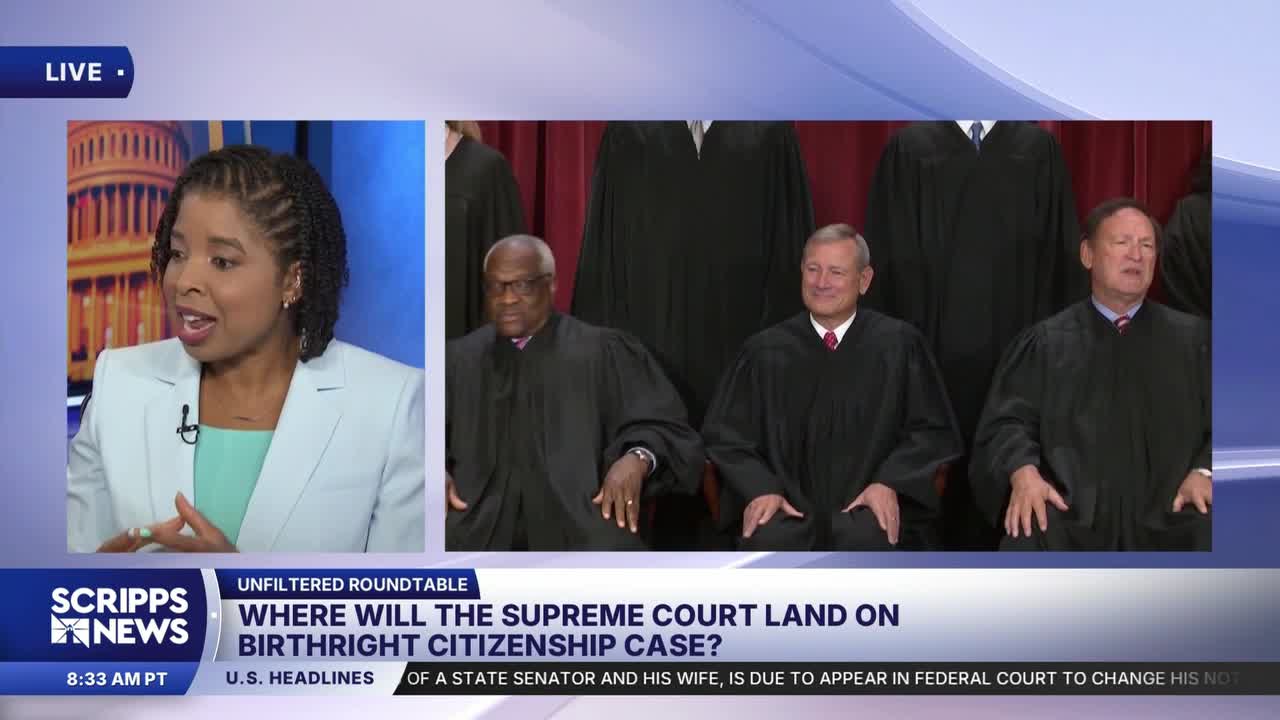


The U.S. Supreme Court term is in its final weeks, and the justices still have 23 outstanding cases to decide.
RELATED STORY | Supreme Court allows Alabama to use congressional map favoring Republicans in this year's elections
Here are some of the big ones:
There's the issue of Birthright Citizenship, and whether babies who were born to undocumented migrants automatically become United States citizens.
President Donald Trump says no, but the ACLU, which sued the Trump administration, said if babies aren't automatically U.S. citizens, that could leave them in limbo.
There's the issue of transgender women and girls in sports, and whether transgender athletes, specifically women and girls, are allowed to participate on all-female teams.
Opponents say this gives transgender women and girls an unfair advantage. There is a young lady out of West Virginia who sued her state — she's a transgender girl — because she wanted to continue to compete on her school's track and field team.
IN CASE YOU MISSED IT | Trump administration sues Minnesota over transgender athlete policy in school sports
There is an immigration case where the justices will need to determine whether the Trump administration is allowed to cancel a program which allows people who are fleeing violence and natural disasters in their countries to remain here in the United States.
It's known as Temporary Protected Status (TPS).
The Trump administration argues this program was meant to be temporary, but we were able to speak with a young lady whose name is Marlene Noble. She was born in Haiti and came here as a baby. She said she can't imagine going back there.
“I no longer speak the language," said Noble. "I don't know any biological family, and just hearing of the violence that is still occurring in that country, it was, it seemed, it felt like a death sentence.”
The Court will also weigh in on a gun rights case, deciding whether someone who is an unlawful user of drugs is allowed to possess a weapon.
Finally, there’s a question of presidential power: Whether President Trump is permitted to fire a member of the Federal Reserve Board of Governors.


