

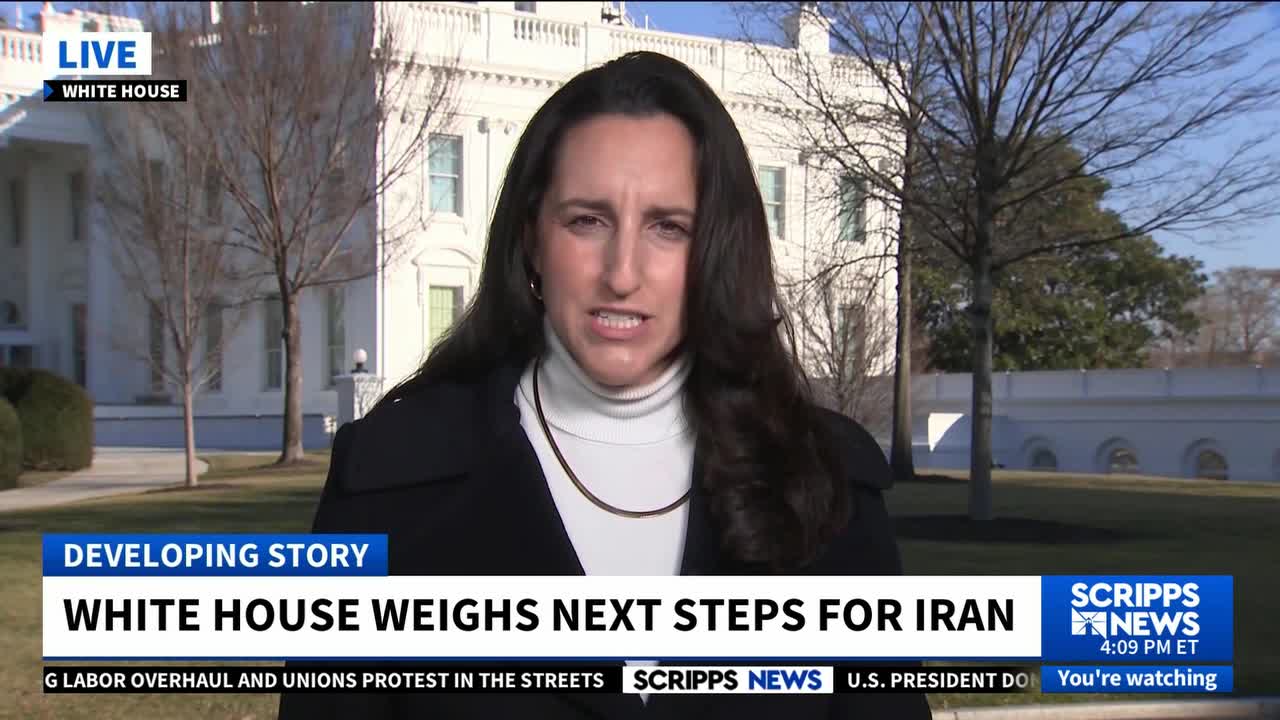


President Trump says he is “not happy” with negotiations but has not made a decision as he weighs his options with Iran.
“I’d rather do it the peaceful way but they’re very difficult people,” Trump said during a visit to Corpus Christi Friday.
Trump told reporters the Iranians “don't want to quite go far enough, and it's too bad,” after indirect talks between the US and Iran, hosted by Oman, ended in Geneva Thursday without an apparent deal, as the US has amassed military assets in the region.
Trump has suggested diplomacy is his preference, but also issued warnings of potential military action without a deal reached over the past months.
“We haven't made a final decision. We're not exactly happy with the way they negotiated. Again, they cannot have nuclear weapons. We're not thrilled with the way they're negotiating,” Trump said. “So we'll see how it all works."
The comments reflect a different tone from the more positive picture other Middle Eastern nations have sought to cast.
Oman foreign minister Badr Albusaidi said he talks ended “significant progress,” while Iran’s foreign minister called the round of talks “the most intense so far” with an understanding “to engage in a more detailed manner on matter that are essential to any deal- including sanctions termination and nuclear-related steps.”
Vice President JD Vance met with Oman foreign minister Badr Albusaidi Friday, according to a source familiar.
The officials discussed the negotiations, according to Albusaidi and according to the foreign ministry, “the diplomatic efforts aimed at reaching a just and sustainable agreement on the nuclear file and ensuring the peaceful nature of Iran's nuclear energy generation program, where His Excellency the Minister clarified that the negotiations have so far achieved major, significant, and unprecedented progress that could form the basic pillar of the desired agreement.”
Iran has denied seeking to create a nuclear weapon, but sought to maintain enrichment for civil purposes. However, President Trump Friday maintained a call for no nuclear weapons, and no nuclear material enrichment from Iran.
“They don't want to say the key words, 'we're not going to have a nuclear weapon.' They have to say, 'we're not going to have a nuclear weapon.' And they just can't quite get there,” Trump said. “They want to enrich a little bit. You don't have to enrich when you have that much oil. So I'm not happy with the negotiation. I say no enrichment, not 20%, 30%, they always want 20%, 30%, they wanted for civilian, you know, for civil, civil, I think it's uncivil, so I'm not happy with it.”
RELATED STORY | Operation Midnight Hammer: What we know about US strikes on Iran's nuclear sites
The U.S. struck Iranian nuclear sites last spring after the IAEA reported Iran was producing uranium enriched up to 60%. Officials have suggested Iran is seeking to rebuild.
“First and foremost, after their nuclear program was obliterated, they were told not to try to restart it, and here they are. You can see them always trying to rebuild elements of it. They’re not enriching right now, but they’re trying to get to the point where they ultimately can,” Secretary of State Marco Rubio said Wednesday, adding that Iran “refuses, refuses, to talk about ballistic missiles to us or to anyone, and that’s a big problem.”
The Iranians are intent to proceed in the direction of rebuilding if they have the opportunity, according to Dr. Jacob Olidort, Chief Research Officer & Director for American Security at the America First Policy Institute.
But the question is diplomatically and military “How do you know, again, respond to that, but while also in one action or series of actions, also address the most of other threats that it presents. And so that, I think, is where, kind of, again, the overall objective, which, again, is still opaque to the public. I think it's clear to the President and his team, that's, I think, where that comes to head here,” Olidort said.
Iranian Foreign Minister Seyyed Abbas Araghchi stated of diplomacy that “success on this path requires seriousness and realism from the other side, as well as avoiding any miscalculation and excessive demands,” during a phone call with his Egyptian counterpart according to Iran’s foreign ministry. Egypt foreign minister Badr Abdelatty also spoke with Trump’s special envoy and negotiator Steve Witkoff.
Amidst the ongoing military build up in the region, Adm. Brad Cooper, the commander of U.S. Central Command, briefed President Trump on Iran and the regional situation Thursday, according to a source familiar.
It’s not clear what potential military option President Trump would pursue. However, Trump said “there’s always a risk” that strikes could turn into a longer conflict in the Middle East when pressed by reporters.
“You know, when there's war, there's a risk in anything, both good and bad. We've had tremendous luck with myself. Soleimani Al Baghdadi, everything's worked out, and then we do the midnight hammer and so many others, everything's worked out, and we want to keep it that way, but we're going to see,” Trump said.
Trump said his team has not told there would be regime change right away if the military was used now, but said “nobody knows.”
“There might be and there might not be. It'd be nice if we could do it without but sometimes you have to do it with we. When you looked at what look we have the greatest military anywhere in the world. There's nothing close. I'd love not to use it. But sometimes you have to be clear,” Trump said.
MORE ON IRAN | US Embassy warns staff: Leave Israel now as risk of Iran clash grows
Meanwhile, the administration continued to pressure Iran. The State Department designated Iran as a state s sponsor of wrongful detention and issued sanctions against those involved Iranians weapons development and shadow fleet vessels.
Secretary of State Marco Rubio is expected to travel to Israel next week to discuss Iran among other issues, according to the State Department, despite the department’s authorization of non-emergency U.S. government personnel and family members to leave Israel Friday.


