

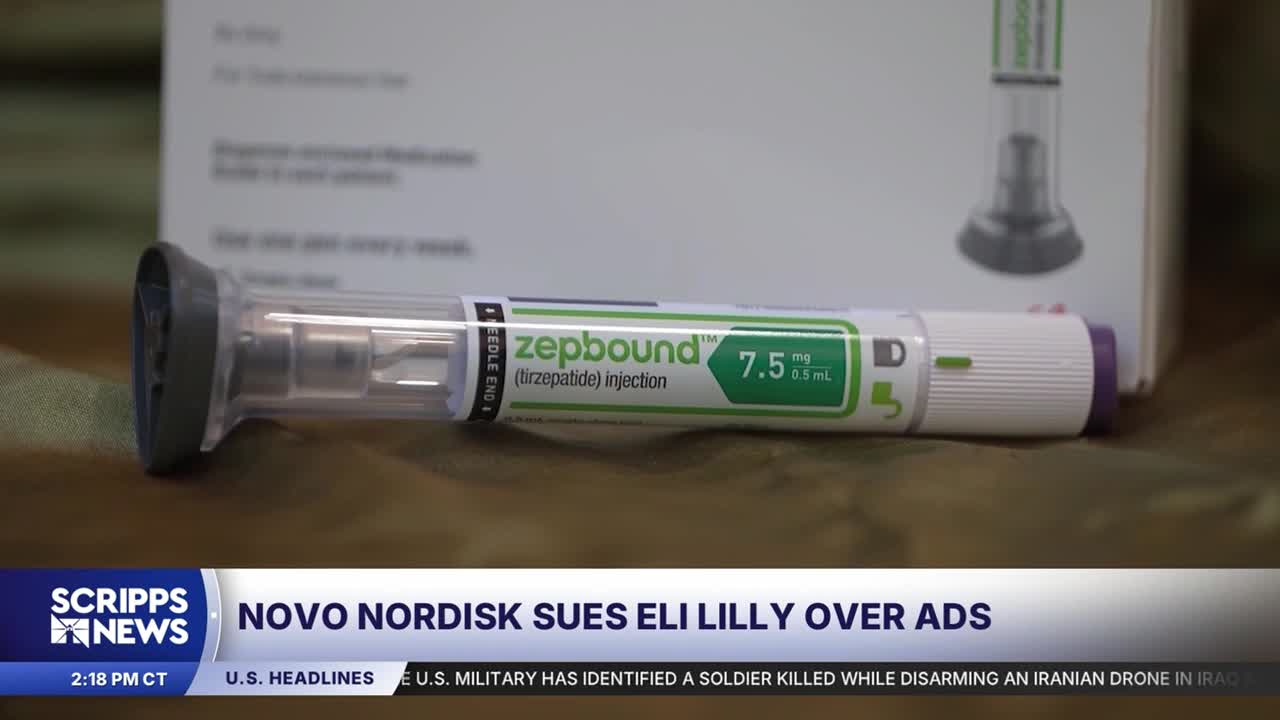


Novo Nordisk, maker of the popular medications Ozempic and Wegovy, filed a lawsuit Tuesday against the pharmaceutical company Eli Lilly, accusing it of making deceptive advertising claims about its weight-loss drug Zepbound.
The company has taken issue with Eli Lilly's ads that claim patients on their Zepbound drug lost more weight than those taking Wegovy.
Novo Nordisk argues those claims are deceptive to consumers and are based on "outdated" clinical trials that compare the highest doses of Zepbound to the lowest doses of Wegovy.
RELATED STORY | Medicare will start covering weight-loss drugs on July 1 for the first time
The company said the ads also lead consumers to believe Eli Lilly's medication is superior to Novo Nordisk's. It wants Eli Lilly to permanently pull the ads and issue new ones with correct information.
Novo Nordisk is also seeking financial damages in its lawsuit.
In statements issued to several media outlets, Eli Lilly said it stands behind its advertising and plans to fight the lawsuit.
Zepbound and Wegovy have different active ingredients that act similarly on the body for weight loss. Wegovy and Ozempic, Novo Nordisk's drug approved for diabetes, are the same medication, while Zepbound is almost the same as Mounjaro, Eli Lilly's diabetes medication. All four drugs are GLP-1s.
RELATED STORY | Medicare pilot program expands access to Wegovy, Zepbound for some seniors


