

Latest Global Burden of Disease data suggest encouraging progress towards the global 2030 harmful use reduction target.
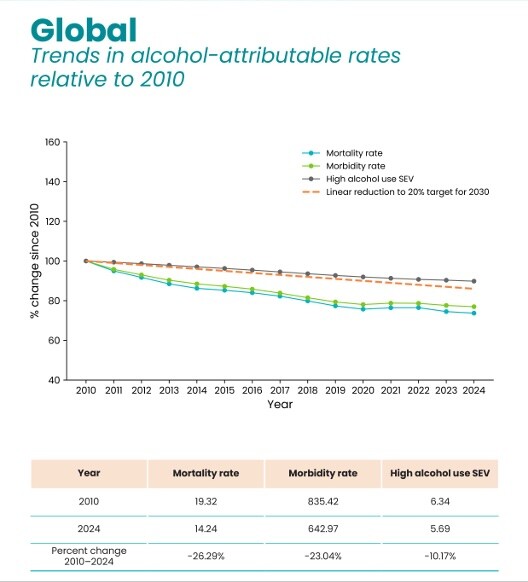
An analysis by the International Alliance for Responsible Drinking (IARD), drawing on the latest estimates from the Institute for Health Metrics and Evaluation's (IHME) Global Burden of Disease (GBD) study, found that the age-standardized alcohol-attributable mortality rate fell by approximately 26% worldwide between 2010 and 2024. IARD's analysis also found that age-standardized alcohol-attributable disability-adjusted life years (DALYs) rate declined by approximately 23%, while high alcohol use exposure, measured using the GBD Summary Exposure Value (SEV), decreased by approximately 10%.
With all three indicators moving in the same direction, IARD's analysis points to a broad reduction in alcohol-related harm since 2010 - the baseline adopted following the UN's Global Strategy to Reduce the Harmful Use of Alcohol. UN member states set a goal of reducing harmful alcohol use by 20% by 2030. The 26% fall in mortality suggests significant progress towards that goal.
"These findings are encouraging and show that meaningful reductions in alcohol-related harm are achievable," said Julian Braithwaite, President and CEO of IARD. "But global averages mask significant differences between countries and regions, and continued progress cannot be taken for granted. Looking across mortality, disability and exposure together provides a stronger evidence base to help governments, healthcare providers and communities make more informed decisions, strengthen ongoing efforts and focus resources where they are most needed."
IARD's analysis does not attribute the global decline to any single cause. The findings are consistent with the cumulative effects of changing patterns of alcohol use, improvements in healthcare, public health initiatives and broader social and economic development. The factors driving progress are likely to differ between countries.
Because the analysis uses age-standardized rates, the decline cannot be explained simply by changes in the size or age of the global population. Instead, it suggests a genuine reduction in alcohol-attributable rates over time, while the variation between countries and regions underlines the need for sustained, locally informed action.
The GBD study applies its own analytical framework, integrating epidemiological and demographic data to produce standardized estimates for comparisons across countries and over time. Because the World Health Organization uses different methodologies and attribution models, the estimates are not directly comparable. IARD presents the latest GBD findings as a complementary perspective alongside WHO monitoring data.
About IARD: The International Alliance for Responsible Drinking is a not-for-profit dedicated to reducing harmful drinking. Source: IHME. Used with permission. All rights reserved.


