



A new soy-based firefighting foam offers a potential alternative for firefighters across the country who have long relied on specialized foams to extinguish dangerous fuel fires -- foams that often contain PFAS, so-called “forever chemicals,” or substances that do not break down in the environment and have been linked to serious health risks.
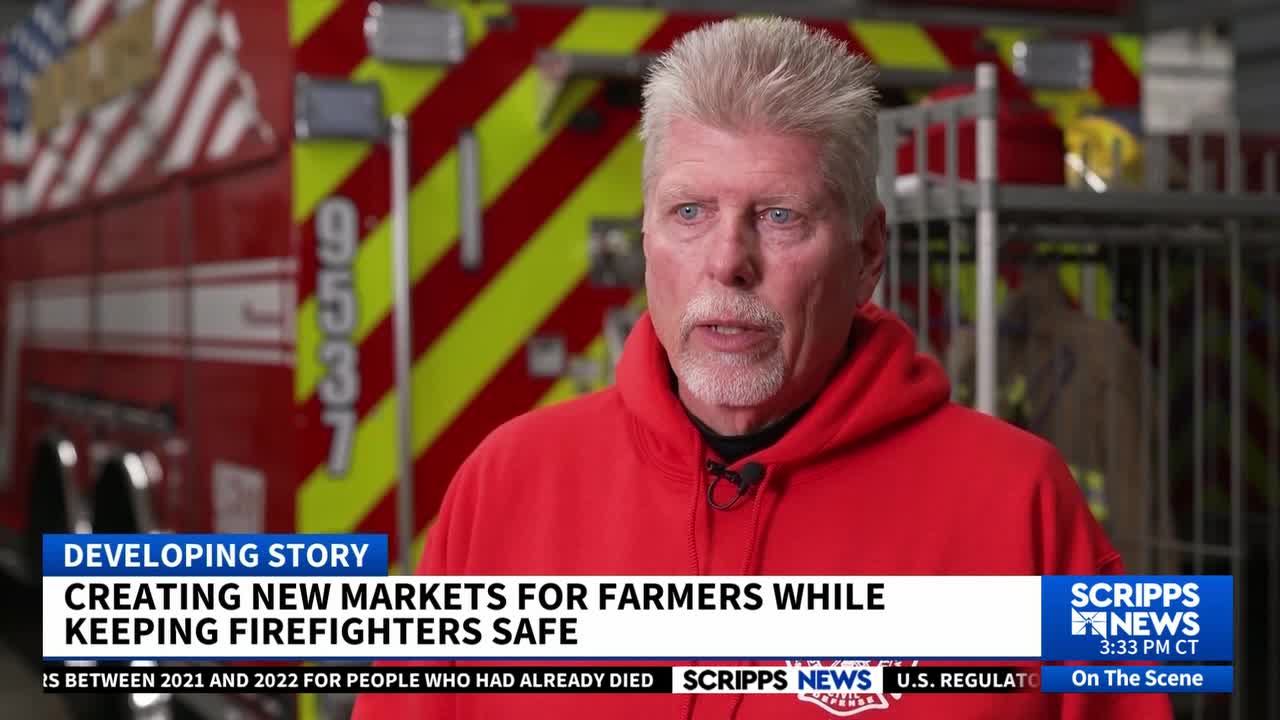
It’s a “win-win-win,” according to Jeff King, an assistant fire chief in Corydon, Kentucky and now the co-owner of SoyFoam Solutions.
The three wins: a safer solution for firefighters, a new soybean market for U.S. farmers, and less harm to the environment.
King’s department became the first to switch exclusively to the soy-based foam, aptly called SoyFoam, after testing it in live-fire scenarios. Since then, the product has expanded rapidly, now used by more than 150 fire departments across 29 states.
Supporters say its appeal comes down to both safety and cost. SoyFoam can be used with existing firefighting equipment, requires no new infrastructure, and is priced competitively with traditional foams that contain PFAS.
“I've farmed all my life. It's made out of soybeans, so that's a good box to check,” King explained to Scripps News on a visit to a training demo in Salem, Illinois. “And then I'm not doing any additional harm to the environment. Plus, when we as firefighters are exposed to these manufactured synthetic products, they put off a tremendous amount of carcinogens when they're burned. So the introduction of soy foam is one less carcinogen that we're exposing ourselves to.”
TRUMP'S TARIFFS | Trump plans aid package for US soybean farmers while seeking trade deal with China
The research behind SoyFoam is also aimed at creating new markets for more than half a million U.S. soybean farmers. Many farmers have struggled following retaliatory tariffs tied to former President Donald Trump’s trade policies. Those tariffs effectively cut off access to China, the largest market for U.S. soybeans, sending prices below the cost of production for many growers.
“Anytime we can produce more of our products domestically, and use them domestically is a big advantage for us,” Steve Reinhard, a United Soybean Board member and former chair told Scripps News. “We're developing new customers every day.”
In Salem, like much of rural America, fire departments depend on volunteer firefighters; many whom are farmers by day, training at night for the next emergency.
“The United Soybean Board funded research to develop a foam, a firefighting foam that contained no PFAS, no fluorolence, no carcinogens, but was as effective as anything that we were using. That kind of piqued my interest,” King told the group of Salem, IL firefighters gathering at the local department ahead of a training demo featuring the new SoyFoam.
Despite a frigid and snowy evening, the firefighters were eager to get out to the training grounds to test the product. They lit a crude oil fire, the flames quickly climbing more than ten feet into the air. Using all the same hoses and nozzles that they typically do, the crew was able to knock down the fire with the targeted spray in a matter of seconds.
“This was impressive,” Jesse DeForest, one of the Salem firefighters, described to Scripps News after the demo. “And if this means we can tap a new market, that’s great, especially if it makes it safer for everyone.”
PFAS, those so-called “forever chemicals,” are found not only in some firefighting foams, but also in fertilizers, industrial waste and a wide range of consumer products. Exposure has been linked to higher risks of prostate, kidney and testicular cancers, as well as fertility and immune system problems.
MORE ON FIREFIGHTING FOAM | New Mexico sues US Air Force over base's 'forever chemical' contamination
Military bases have been among the most contaminated sites in the country due to years of training exercises using PFAS-laden foams. Cleanup efforts have proven costly and complex, further fueling the push for alternatives that do not rely on fluorinated chemicals.
But earlier this month, lawmakers released a new version of the annual National Defense Authorization Act that includes language granting the Pentagon more time to eliminate firefighting foams containing PFAS. The Department of Defense had originally set a deadline to completely phase out the foams by 2026, but this extension will give the opportunity to continue to purchase the foams through 2026, which can then be used through waivers until 2028.


